
Bimetal Sheets Manufacturer and Exporter in Mumbai
Product Overview
In industries where electrical performance, heat dissipation, and mechanical strength all matter simultaneously, a single metal is rarely sufficient on its own. Engineers and procurement specialists across the electrical, switchgear, automotive, and power distribution sectors increasingly turn to one solution that delivers the properties of two metals in a single bonded material. Bimetal sheets — precision-bonded composite materials combining the conductivity of copper with the lightweight economy of aluminium — have become one of the most specified materials in modern electrical and industrial manufacturing.
Jain Impex is a Mumbai-based manufacturer and exporter supplying high-quality bimetal products to industries across India and international markets. With decades of expertise in non-ferrous metals including copper, aluminium, brass, and GI earthing materials, the company brings the same rigorous quality standards to its bimetal product range — delivering materials that perform reliably in the most demanding electrical and industrial environments.
What Is a Bimetal Material and How Is It Made?
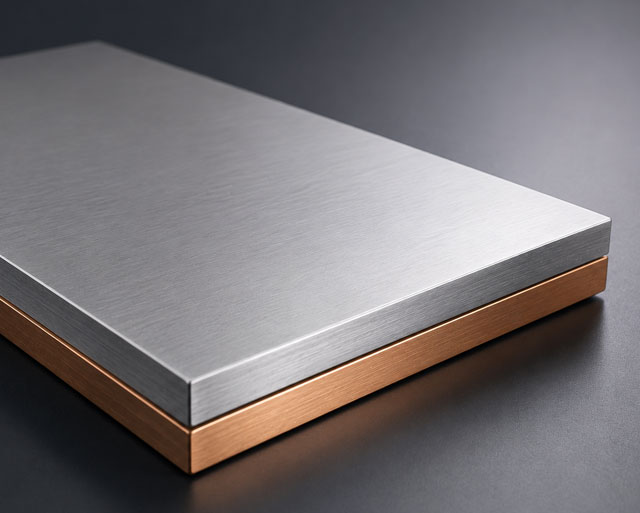
A bimetal material is a composite product created by permanently bonding two different metals together through a controlled metallurgical process. The bond is not adhesive or mechanical — it is a true metallurgical union achieved through rolling, explosion bonding, or continuous casting under high pressure and temperature. The result is a material that behaves as a single unit under thermal and mechanical stress, combining the distinct properties of each constituent metal into one integrated product. In the case of bimetal sheets combining copper and aluminium, the finished material delivers the high electrical and thermal conductivity of copper on the contact surface with the low weight and cost efficiency of aluminium in the core structure.
The Copper-Aluminium Bonding Process
The most widely specified bimetal combination in electrical applications pairs copper with aluminium. Copper provides excellent electrical conductivity — approximately 60% better than aluminium — and superior contact resistance at terminal and connection points. Aluminium contributes significantly lower density, reducing the overall weight of busbars, connectors, and strip materials without compromising structural integrity. The bonding process ensures that the copper layer — typically ranging from 10% to 30% of the total cross-section — adheres permanently to the aluminium core, creating a product that cannot delaminate under normal operating conditions.
Bimetal vs Single-Metal Alternatives
The practical advantage of a bimetal composite over its single-metal alternatives is most evident in applications where both conductivity and weight are critical design parameters. A pure copper busbar of equivalent current-carrying capacity to a copper-clad aluminium bimetal equivalent will weigh approximately three times more and cost significantly more per unit length. For large-scale electrical installations — power distribution panels, switchgear assemblies, transformer connections, and busbar trunking systems — these weight and cost differences compound significantly across the total material requirement of a project.
Types of Bimetal Sheets Supplied by Jain Impex
Jain Impex supplies bimetal sheets and related bimetal products in a range of configurations to suit different application requirements. The product range covers varying copper-to-aluminium ratios, sheet dimensions, thickness tolerances, and surface finish specifications — allowing procurement teams and design engineers to specify the exact material parameters required for their application rather than working around a limited standard range.
Copper-Clad Aluminium Sheets :
Copper-clad aluminium (CCA) sheets are the most widely used bimetal format in electrical applications. They consist of a pure aluminium core with copper layers bonded to one or both faces. The copper thickness ratio is typically specified as a percentage of total cross-section — common specifications include 10%, 15%, 20%, and 25% copper by cross-section — and the total sheet thickness and dimensions are produced to customer specification. These sheets are used directly in busbar fabrication, electrical panel construction, switchgear manufacturing, and transformer winding applications.
Bimetal Strips and Flat Bars
In addition to full sheet formats, bimetal materials are available as strips and flat bars — pre-cut to width and supplied in coil or cut-length format. Strip and flat bar configurations are particularly suited to high-volume applications where the material is fed directly into stamping, forming, or punching operations. Electrical terminals, battery connectors, transformer tap changers, and circuit breaker components are typical applications for bimetal strips where the dimensional precision and surface quality of the material directly affect the performance and reliability of the finished product.
Surface treatment and plating options
Bimetal products can be supplied with additional surface treatments including tin plating, silver plating, and nickel plating on the copper face — improving contact resistance, corrosion protection, and solderability depending on the end application. These treatments are specified at the ordering stage and applied before shipment, reducing the processing requirements at the customer’s facility.
Key Applications Across Industries
The combination of electrical performance, weight efficiency, and cost advantage that bimetal sheets provide makes them valuable across a wide range of industries. Understanding the specific application context helps in selecting the correct copper ratio, thickness, and surface specification for each requirement.
Electrical and Power Distribution
The largest application sector for bimetal materials is electrical engineering — specifically in busbars, switchgear, panel boards, and distribution boards. In these applications, the material must carry significant current loads continuously while maintaining low resistance at connection points and resisting the thermal cycling that comes with variable load conditions. Copper-clad aluminium busbars in this sector offer a direct weight and cost reduction compared to solid copper equivalents, while meeting the same current-carrying capacity and connection integrity requirements when correctly specified and installed.
Transformer Manufacturing
Power transformers and distribution transformers use bimetal materials in winding connections, tap changers, and terminal arrangements. The connection between copper winding conductors and aluminium terminal blocks is a historically problematic interface — galvanic corrosion at dissimilar metal junctions can cause resistance increases and failure over time. A bimetal transition piece at this junction eliminates the dissimilar metal contact, providing a copper interface on the winding side and an aluminium interface on the terminal side, with the metallurgical bond preventing any corrosion pathway between them.
Automotive and EV Battery Systems
The growing electric vehicle and energy storage sector has created significant new demand for bimetal connectors and battery interconnects. In battery pack assemblies, the connections between individual cells and between battery modules require materials that combine low resistance with light weight — both critical parameters in EV design where every gram of battery system weight affects vehicle range. Bimetal strips and sheets in EV battery applications are typically specified with tight dimensional tolerances and superior surface finish requirements to ensure consistent contact resistance across large numbers of parallel connections.
Switchgear and Circuit Protection
Medium-voltage and low-voltage switchgear assemblies incorporate bimetal components in contact arms, terminal blocks, and busbar systems. The thermal performance of the material is particularly important in switchgear applications — during fault conditions, the material must withstand short-duration high-current events without delaminating or losing conductivity at the bond interface. Quality-tested bimetal products from established manufacturers meet the IEC and IS standards applicable to these applications, giving switchgear designers confidence in the material’s behaviour under both normal and fault conditions.
Why Choose Jain Impex for Bimetal Products
Jain Impex — Trusted Bimetal Sheets Manufacturer in Mumbai
Jain Impex has built its reputation in the Indian non-ferrous metals market through consistent quality, reliable supply, and technical knowledge of the materials it manufactures and exports. The company’s Mumbai base — one of India’s primary commercial and industrial centres — provides direct access to port infrastructure for export shipments and proximity to the major industrial clusters across Maharashtra and Western India that represent the core of its domestic customer base.
Manufacturer quality standards :
Products manufactured to precise dimensional and composition tolerances with quality verification at each production stage
Wide product range :
Copper, aluminium, brass, GI earthing, and bimetal products available from a single supplier — simplifying procurement and reducing vendor complexity
Export capability :
Established export logistics for international buyers requiring bimetal materials to destinations across Asia, the Middle East, Africa, and beyond
Custom specifications :
Products supplied to customer-specified dimensions, copper ratios, and surface treatments rather than fixed standard sizes only
Technical support :
Application guidance available to help customers specify the correct material grade and configuration for their specific use case
Competitive pricing :
Mumbai-based manufacturing and established raw material supply chains enable competitive pricing on both domestic and export orders
Source Your Bimetal Requirements From a Trusted Mumbai Manufacturer
The specification of the right material at the design stage determines the long-term performance, reliability, and total cost of any electrical or industrial system. For engineers and procurement professionals working with copper-aluminium transition interfaces, weight-sensitive busbar systems, or high-volume stamped electrical components, the quality and consistency of the bimetal sheets supplied is not a secondary consideration — it is a primary determinant of system performance.
Jain Impex supplies bimetal products from its Mumbai facility to industrial customers across India and international export markets — with the product range, technical knowledge, and supply reliability that consistent industrial procurement requires. Contact the team today to discuss your specific requirement and receive a competitive quotation.